


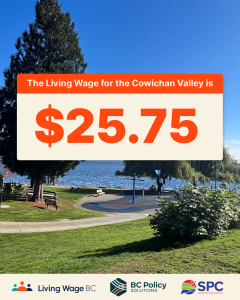
 Social Planning Cowichan has released the 2025 Living Wage for the Cowichan region, confirming that the hourly rate needed to cover basic expenses has increased to $25.75 per hour. This is the highest rate reported since the calculation began, and slightly above last year’s figure of $25.71. While the change appears small, the underlying data paints a clear picture: affordability pressures continue to intensify for households across the region.
The living wage reflects the hourly amount a worker must earn to meet essential costs, avoid chronic financial stress, and participate in community life. For the Cowichan region, this year’s calculation highlights rising costs for housing, food, and transportation, areas that continue to shape the daily realities of residents and employers.
A more representative calculation for 2025
A major methodological shift shapes this year’s living wage. Instead of basing the calculation solely on a two-parent household with two children, the 2025 model uses a weighted average of three household types:
- a single adult,
- a single parent with one child, and
- a two-parent family with two children.
Because single adults typically have lower expenses than families with children, the new approach produces a more representative regional figure, but it also means the modest increase from last year should not be mistaken for easing affordability. Rising rents and food costs remain significant pressures for all household types.
What’s driving the 2025 living wage?
Housing costs continue to be the largest expense in the household budget. Although asking rents have shown early signs of levelling off, they are still rising faster than inflation and remain challenging in a region with low vacancy rates.
Food costs rose by 3.6% this year, making groceries the second-largest pressure on the living wage calculation. Food insecurity continues to worsen across BC, with food banks playing an increasing role in supporting households.
Transportation also plays a unique role in the Cowichan region. Many households rely on multiple vehicles due to long travel distances and limited transit options. The extended transit strike in 2025 added additional strain, particularly for workers without access to a personal vehicle.
At the same time, government programs such as expanded child care supports, the Canadian Dental Care Plan, and the enhanced BC Rental Assistance Program have helped reduce pressure, but not enough to counterbalance rising costs.
The gap between wages and basic costs
BC’s current minimum wage is $17.85 per hour, creating a gap of $7.90 between the minimum wage and the living wage in the Cowichan region.
Across the province, nearly one in three workers earn less than the living wage, with women and racialized workers disproportionately represented in lower-wage roles.
 Living wage employers in the region
More than 450 employers in BC have committed to paying a living wage. Living wage certified employers in the Cowichan region include:
- David Coulson Design
- Canadian Bavarian Millwork & Lumber
- Hakai Energy Solutions
- Kinsol Timber Systems
- Made to Last Custom Homes
- Major Crown Projects
- Sparkling Legacy
- Viridian Energy Co-operative
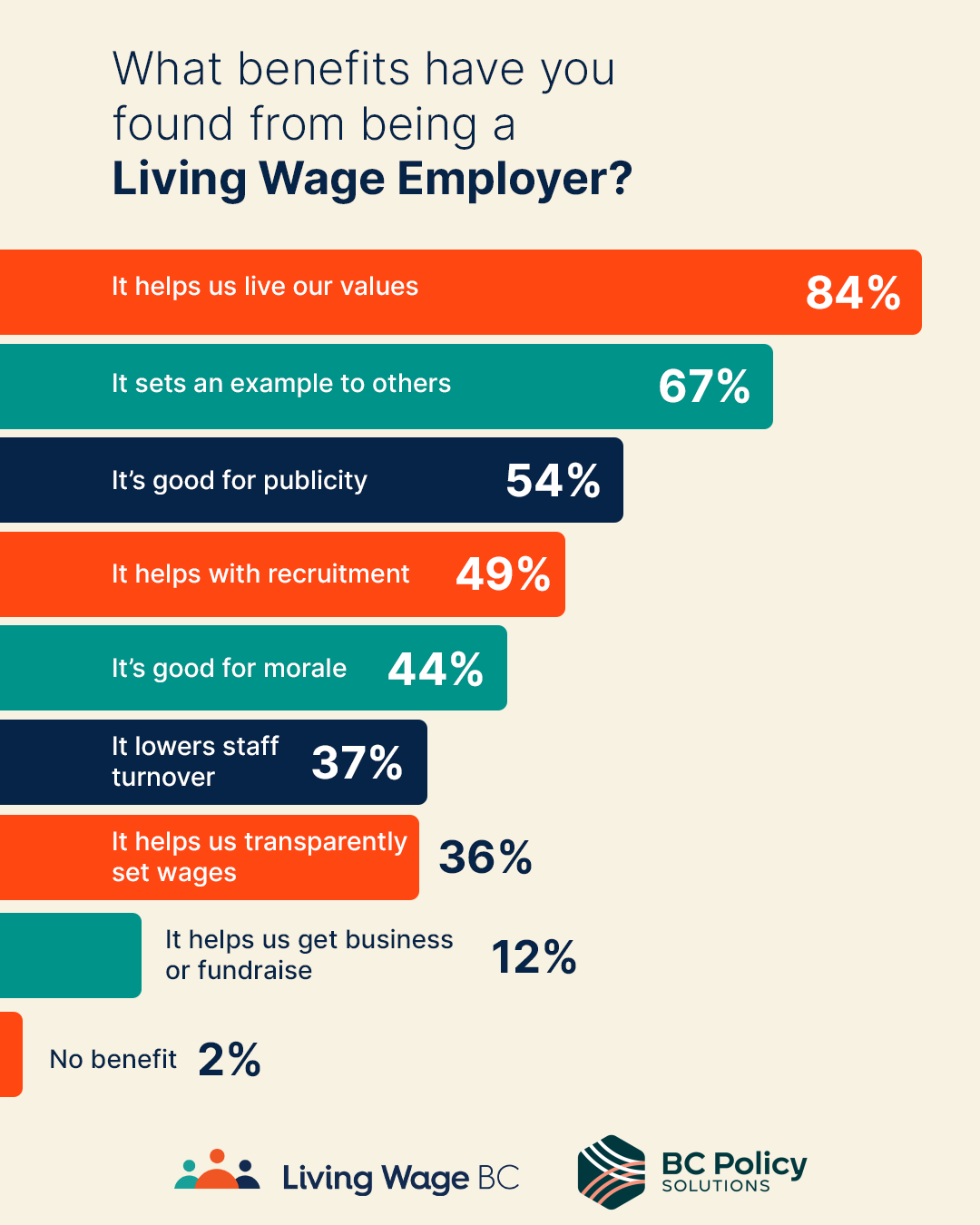
Living wage employers report benefits like stronger staff retention, improved morale, and clearer wage structures.
Becoming a certified Living Wage Employer is one way local businesses can support community wellbeing, strengthen their workforce, and contribute to reducing working poverty.
Learn more
To explore the 2025 Living Wage calculation, view the full local briefing, or learn how to become a certified Living Wage Employer, visit Social Planning Cowichan and Living Wage BC:
Photo credit: Alderlea Farm Cafe, Tourism Cowichan, Tyler Cave

